Small Company Tax Exemption: Is Your Business Really Tax-Free at ₦25m or ₦50m?
Small Company Tax Exemption is something many founders assume they’ll automatically qualify for until they realize they’re paying far more …


Small Company Tax Exemption is something many founders assume they’ll automatically qualify for until they realize they’re paying far more than necessary. Most Nigerian startups believe they’ll know when their business is “big enough” to worry about taxes, but that assumption quietly costs companies millions every year.
Because when it comes to tax exemptions, feeling small doesn’t matter. Only numbers do. And right now, thousands of business owners are confused about one critical question:
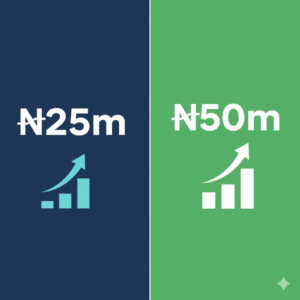
Is a small company tax-exempt at ₦25 million or ₦50 million turnover?
The answer is not as simple as social media makes it sound.
Why the ₦25m vs ₦50m Debate Refuses to Die
This confusion exists because Nigerian tax laws have evolved faster than public understanding.
At different times:
-
₦25 million was used as the benchmark for small company exemptions
-
Later reforms expanded reliefs and adjusted thresholds
-
Online summaries, outdated blog posts, and WhatsApp advice mixed everything together
The result is a dangerous gray area where businesses assume exemption instead of confirming it.
Suggested read: The 2025 Finance Act: 5 Clauses That Will Change How You Do Business
Tax law does not reward assumptions.
How Small Company Tax Exemption Actually Works in Nigeria
In tax law, “small” is not a feeling. It is a calculation.
1. Annual Gross Turnover
This is the headline figure everyone talks about, and also the most misunderstood.
Depending on the tax year and applicable legislation:
-
Some exemptions reference ₦25 million
-
Others extend relief up to ₦50 million
What matters is which Finance Act governs your assessment year, not which figure you saw last on Twitter.
2. Total Asset Base
Turnover alone does not decide exemption.
If your company owns:
-
Vehicles
-
Heavy equipment
-
Office property
-
High-value technology assets
You may lose exemption eligibility even if your revenue appears low.
Suggested read: The “Agency” Dilemma: Managing Project-Based Finances vs. Recurring Revenue
This is where many startups get caught off guard.
The Hidden Cost of Getting This Wrong
Using the wrong threshold does not just create a paperwork issue. It creates real financial risk.
If you wrongly assume exemption:
-
Tax authorities may assess back taxes
-
Penalties and interest may apply
-
Your company becomes audit-exposed
If you wrongly assume you are taxable:
Suggested read: Business vs. Pleasure: The Danger of Commingling Funds
-
You lose working capital
-
Growth slows unnecessarily
-
You overpay without realizing it
Both outcomes hurt. Only clarity protects you.
A Short Story Most Founders Recognize
Ayo runs a digital agency. Revenue fluctuates wildly. One good year, she crossed ₦40 million. The next year, she dropped below ₦30 million.
She assumed exemption applied automatically.
It didn’t.
Her mistake was not dishonesty. It was not tracking thresholds properly across tax years.
This is exactly where founders need systems, not memory.
Suggested read: Business vs Personal Money: Why Every Entrepreneur Should Separate Their Accounts
Which Threshold Should Your Business Use Today?
Here is the rule that never fails:
Apply the turnover threshold stated in the Finance Act governing your specific assessment year, alongside your asset position.
Before filing, you should always know:
-
Your confirmed annual turnover
-
Your qualifying asset value
-
Which exemptions apply to your business type
-
Whether exemption covers all taxes or only some
If you cannot see these numbers clearly, you are operating blind.
Why This Matters More as You Grow
Most businesses do not fail because they stay small.
They struggle because they grow without financial visibility.
Suggested read: Understanding the Link Between Accounting and Business Growth
As revenue increases:
-
You may cross thresholds faster than expected
-
Exemptions may expire quietly
-
Compliance obligations expand
Growth without financial intelligence creates risk.
This is exactly where an AI CFO becomes essential.
How Zaccheus Solves This Problem
Zaccheus is built for moments like this.
Instead of guessing whether you are tax-exempt, Zaccheus:
-
Tracks your real turnover automatically
-
Flags when you approach exemption limits
-
Interprets tax rules in plain language
-
Shows your exposure before penalties appear
You do not need to remember thresholds. Your CFO should.
Suggested read: Recover From a Bad Financial Year: How to Rebuild Confidence and Stabilize Your Business

Conclusion: “Small” Is a Tax Definition, Not a Feeling
The ₦25m vs ₦50m debate highlights one thing clearly: tax compliance today isn’t about the size of your business, it’s about accuracy.
If you want to:
-
Avoid penalties
-
Stop overpaying
-
Grow with confidence
You need to replace assumptions with clarity. And clarity begins with knowing your numbers in real time.
Understanding small company tax exemptions is no longer optional for founders who want to scale safely. The ₦25m vs ₦50m discussion proves why relying on accurate financial data, rather than guesswork, is essential. When you truly know where your business stands, compliance becomes simple and growth becomes confident.
Suggested read: How to Create a Solid Exit Strategy for Your Business
Call to Action
Still unsure whether your company is truly tax-exempt?
Let Zaccheus, your AI CFO, analyze your turnover, assets, and tax position instantly.
No spreadsheets. No confusion. No surprises.
Check your tax status with Zaccheus today
FAQ Section
Is every small company tax-exempt in Nigeria?
No. Tax exemption depends on turnover, asset value, applicable Finance Act, and tax year. Being small in operations does not guarantee exemption.
Does the ₦50m threshold apply to all tax years?
No. Different Finance Acts apply different thresholds. Always confirm which law governs your assessment year.
Can a company be exempt from some taxes but not others?
Yes. A company may be exempt from Company Income Tax but still have filing or PAYE obligations.
What happens if I wrongly claim tax exemption?
You may face back taxes, penalties, and interest if discovered during an audit or review.
How can I track exemption eligibility easily?
Using a financial intelligence platform like Zaccheus helps you track turnover, assets, and compliance automatically.