Importing Goods? How to Calculate Landed Cost When Customs Rates Fluctuate
Importing goods can be exciting and profitable, but many businesses stumble when customs duties and fees fluctuate. A shipment that …


Importing goods can be exciting and profitable, but many businesses stumble when customs duties and fees fluctuate.
A shipment that seemed affordable suddenly costs more due to changing taxes, exchange rates, or port charges. This is why calculating the total import cost, also known as the landed cost, is critical.
Misjudging it can shrink margins, reduce profits, and leave you selling at a loss.
What Is Landed Cost?
Landed cost is the total amount you pay to get a product to your warehouse or store. It includes:
- Product price from the supplier
- Freight and shipping charges
- Insurance during transit
- Customs duties and taxes
- Handling fees at ports
Understanding this final import cost ensures accurate pricing and protects your profits.
Why Customs Rates Matter
Customs rates are not fixed. They change depending on:
- Product classification (HS code)
- Country of origin
- Government policy updates
- Currency exchange fluctuations
Even small changes can significantly affect the overall cost of imported goods, especially for bulk shipments. For example, a 5% increase in duties on electronics can add millions of naira to your total expenses.

Step-by-Step: Calculating Total Import Cost
Step 1: Start with Supplier Price
Include the invoice amount, factory charges, and local shipping to the port of departure.
Step 2: Add Freight and Insurance
Whether shipping by sea or air, include:
- Freight charges (container or air freight)
- Insurance covering loss or damage during transit

Step 3: Include Customs Duties
Customs duties are calculated based on:
Suggested read: Valuation 101: How Clean Books Increase Your Company’s Worth
- Declared value of goods
- Applicable duty percentage
- Any exemptions or trade agreements
If rates fluctuate, estimate a range—for example, 10–12%—to anticipate cost changes.
Step 4: Add Port and Handling Fees
Ports charge:
- Terminal handling fees
- Documentation fees
- Storage or demurrage fees
Check these costs in advance to avoid surprises.
Step 5: Include Taxes and Additional Charges
Value Added Tax (VAT) or sales tax may apply. Account for local regulations and currency conversions.
Step 6: Total Everything
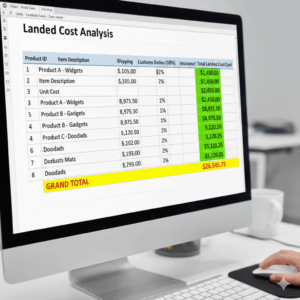
Total Import Cost = Supplier Price + Freight + Insurance + Customs Duties + Port Fees + Taxes
Once you calculate this, you can set selling prices confidently.
Tips to Manage Fluctuating Customs Rates
- Stay Updated: Regularly check government notifications on duties and tariffs.
- Negotiate with Suppliers: Lock prices or adjust order sizes if rates are expected to rise.
- Plan for Currency Changes: Fluctuating exchange rates can increase import costs.
- Estimate Conservatively: Add a small buffer to anticipate changes.
- Use Digital Tools: Platforms like Zaccheus can track costs and rates in real time.
Example: Electronics Import
Suppose you import smartphones:
- Supplier price: ₦50,000 per unit
- Freight & insurance: ₦5,000
- Customs duty: 10–12% (₦5,000–₦6,000)
- Port fees: ₦1,500
- VAT: 7.5% on total (₦4,950 approx.)
Estimated landed cost per unit: ₦66,450–₦67,450
Planning for fluctuation ensures you stay profitable even if customs rates rise.
Suggested read: How Much Cash Runway Does a Nigerian SME Actually Need?
Final Thoughts
Calculating the final landed price is essential for importers. Fluctuating customs rates can catch businesses off guard, but accurate forecasting prevents hidden losses, ensures competitive pricing, and protects margins.
Track supplier costs, shipping, duties, port fees, and taxes carefully. Monitor changes, plan ahead, and you can maintain profitable imports even in unpredictable conditions.
Call to Action
Stop guessing your import expenses.
Use Zaccheus to calculate landed costs in real time, track customs fluctuations, and price your products confidently.